Two Council Tax reductions, and most people only ask about one
One scheme looks at what a household has coming in. A separate one looks at the property itself, and can charge a home at a band below the one it sits in. Both are decided by the same council, under different rules, on different forms.
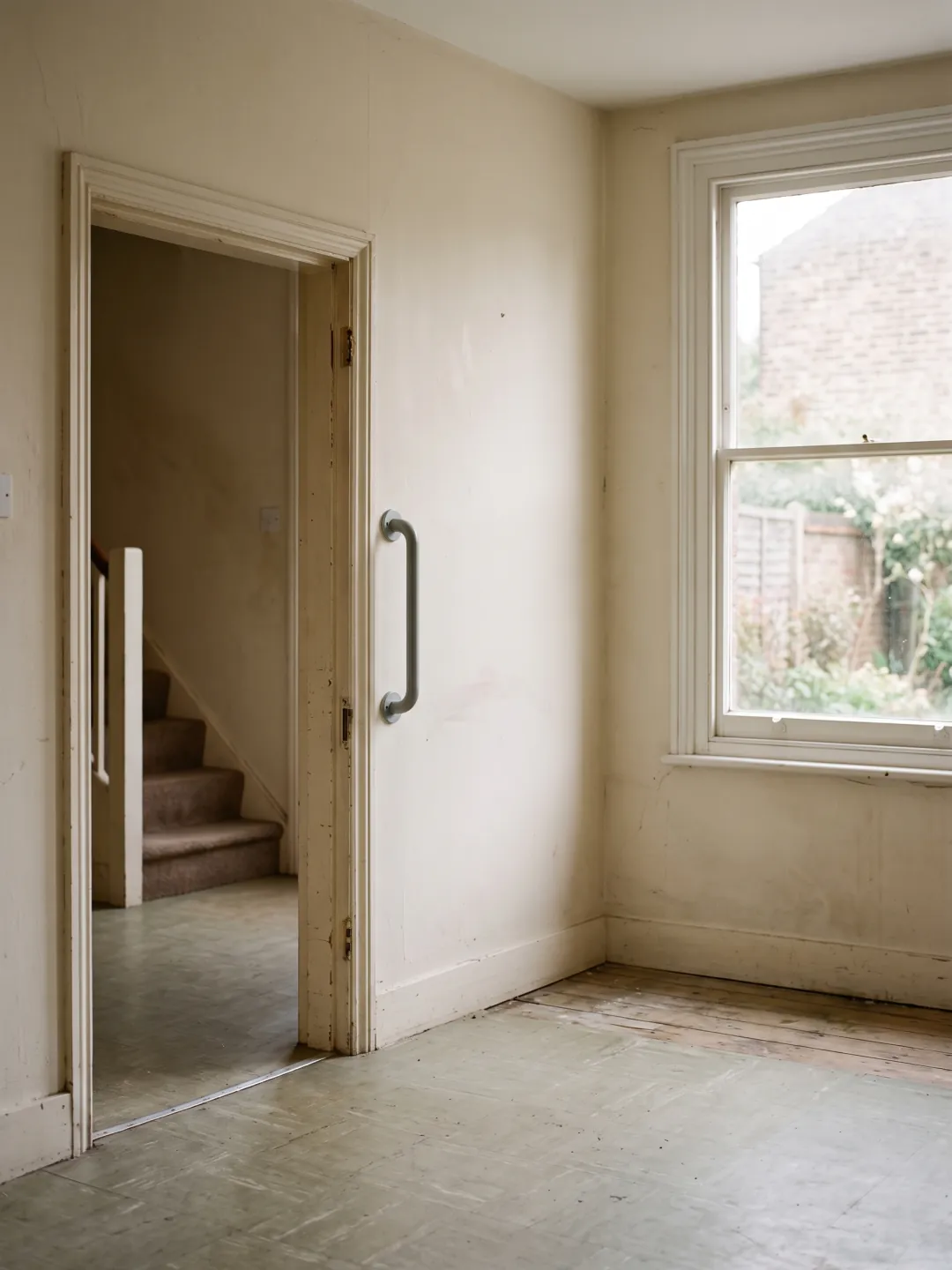
Council Tax help is usually discussed as a single thing, and people who have been told their income is too high for it tend to stop there. There is more than one reduction, and at least one of them does not look at income at all.
The first one is means-tested and local
Council Tax Reduction — called Council Tax Support in some areas — reduces a bill according to income, capital and household circumstances. In England each council designs its own scheme for working-age residents, which is why neighbouring areas can treat identical households differently. Rules for pension-age residents follow a national framework, and Wales and Scotland operate their own national schemes.
A Pension Credit award is the usual route in for pension-age households, which is one of the reasons that benefit is worth claiming even when the top-up looks small — see Pension Credit is a small top-up, and the doors it opens are not.
The second one is about the property
The Disabled Band Reduction Scheme is the reduction most often missed, because nothing about it depends on income or savings. It asks whether the home has had to accommodate a disabled resident's needs. Where it applies, the bill is charged as though the property were in the band below.
Broadly, it can apply where a property contains:
- a room, other than a bathroom, kitchen or lavatory, used predominantly by the disabled resident to meet their needs;
- an additional bathroom or kitchen required to meet those needs; or
- enough extra space inside the property for the use of a wheelchair.
A property already in the lowest band is not left out: there is a reduction equivalent to a proportion of the Band D charge, so the scheme still produces a saving.
The point worth noticing
The Disabled Band Reduction Scheme does not ask what the household earns or has saved. It asks what the property has had to provide. A household told it earns too much for Council Tax Reduction may still qualify for this, and the two are applied for separately.
A third mechanism, which works by discounting people
Separately again, some residents are disregarded when a council counts how many adults live in a property. If disregarding somebody leaves one counted adult, the single-person discount of 25 per cent can apply; if it leaves none, a larger reduction or an exemption may follow.
Two categories matter most here. A person who is severely mentally impaired can be disregarded, where the condition is certified by a medical practitioner and a qualifying benefit is in payment — and PIP is among the benefits that can satisfy that second limb. And a live-in carer can be disregarded in defined circumstances, which generally require substantial weekly care, that the person cared for receives a qualifying disability benefit, and that the carer is not the person's spouse, partner or the parent of a child under 18.
They are not alternatives
This is the practical heart of it. The reductions operate on different parts of the bill and can apply together. A household might have the property charged at a lower band under the disabled band reduction, have an adult disregarded, and receive means-tested Council Tax Reduction on what remains.
A worked illustration
Take a Band D property in England occupied by a woman of 74 who receives Attendance Allowance, and her daughter, who has moved in to care for her.
- Band reduction. A downstairs room has been converted into a bedroom used predominantly by the mother because she can no longer manage the stairs. If the council accepts that, the bill is charged at Band C rather than Band D. Nothing about the household's income is relevant to this.
- Carer disregard. The daughter provides substantial care and is not a spouse or partner. If she is disregarded, the property counts one adult — bringing the 25 per cent single-person discount into play.
- Means-tested reduction. Whatever remains is then considered against the council's Council Tax Reduction scheme, which does look at income and capital.
An illustration of how the three mechanisms can combine. Each has detailed conditions, some set locally, and every one is decided by the council on the evidence. Not a calculation of any household's bill.
How to apply, and the part that trips people up
All of it goes through the local council rather than DWP, and each reduction has its own application. A council will not generally apply the band reduction because it knows a resident receives a disability benefit — the property question has to be put to it, usually with evidence about the room or the adaptation, and sometimes with a visit.
Backdating is possible in some circumstances, and policies vary, so it is worth asking explicitly rather than assuming a reduction starts from the date of the letter. If an application is refused, councils have an internal review process and there is a further route to the Valuation Tribunal.
Where else an award reaches
Council Tax is one of several places a disability benefit award is taken into account by a body other than DWP. The wider list is in what a PIP award opens up besides the payment, and the travel concession that most often follows a mobility award is covered in the Blue Badge does not always wait for a mobility score.
The short version: being turned down for the income-based reduction says nothing about the property-based one. They are different questions, and only one of them is about money coming in.
Official sources
General information. This article explains published rules as they stood on 18 October 2026. It is not an eligibility decision, a benefits calculation, or financial, legal or medical advice, and it cannot establish what any individual is entitled to. Figures quoted are the published rates or modelled examples, not a statement of what a particular reader would receive.
SK MMP is an independent information publisher operated by KA Consulting UG. It is not connected to the Department for Work and Pensions, HM Revenue & Customs, the Scottish Government or any other public body, and it cannot accept, process or progress a claim. For a decision on your own circumstances, use the official service at GOV.UK or take independent advice.