Carer's Allowance overlaps with the State Pension, and the overlap decides who is paid
Thirty-five hours of care a week can qualify somebody for a weekly payment. Reaching State Pension age rarely ends the caring, but it frequently ends the payment — without ending the entitlement. The distinction is worth more than it sounds.
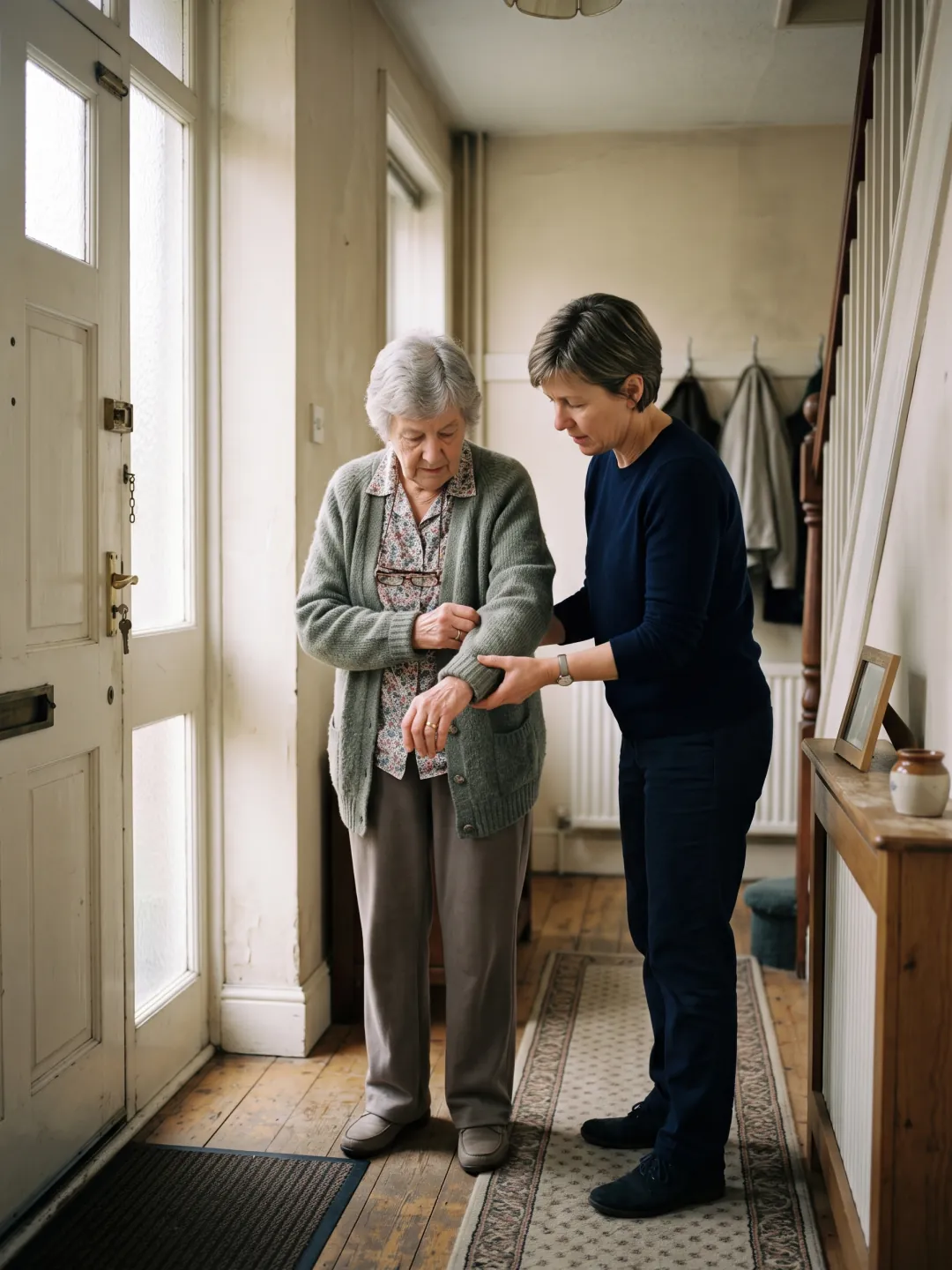
Carer's Allowance is the main benefit for people providing substantial unpaid care. It is also the benefit whose rules catch the most people out, because two of them behave in ways that are not intuitive: it cannot usually be paid alongside a State Pension, and it has an earnings limit with no taper at all.
The basic conditions
Carer's Allowance is for someone who spends at least 35 hours a week caring for a person who receives a qualifying disability benefit — Attendance Allowance, the daily living component of PIP, the middle or highest rate care component of Disability Living Allowance, or the Scottish equivalents. The carer does not have to live with the person or be related to them.
| Weekly figure | |
|---|---|
| Carer's Allowance | £86.45 |
| Earnings limit (after allowable deductions) | £204.00 |
Published 2026/27 figures from the DWP benefit and pension rates for 2026 to 2027. Carer's Allowance is taxable, unlike PIP and Attendance Allowance.
Only one person can be paid Carer's Allowance for caring for the same individual, even where the care is genuinely shared. And unlike the disability benefits it attaches to, Carer's Allowance is taxable — a point that surprises people who have read that PIP and Attendance Allowance are tax-free.
The earnings limit is a cliff, not a slope
Earnings above the weekly limit remove entitlement entirely. There is no reduction in proportion to the excess: a carer earning a pound over the limit does not lose a pound, they lose the whole payment for that week.
What counts is earnings after allowable deductions, which is where a little care pays. Tax and National Insurance come off. Half of any contribution into a pension scheme can be deducted. Certain work-related expenses, and in defined circumstances a proportion of the cost of care for the person cared for or for a child while the carer works, can also be taken into account.
This has a practical consequence for anyone working close to the line. Increasing a pension contribution reduces the figure measured against the limit, and for somebody a small amount over, that can be the difference between keeping the payment and losing it. Overtime, bonuses and irregular shifts are the usual causes of an accidental breach, and the obligation to report a change in earnings sits with the carer.
The overlap at State Pension age
Carer's Allowance and the State Pension are overlapping benefits, which in this system means they are not paid together in full. Where the State Pension is equal to or more than the Carer's Allowance rate, the Carer's Allowance is reduced to nothing.
The full new State Pension for 2026/27 is £241.30 a week, well above the £86.45 Carer's Allowance rate. So for most people with a reasonably complete National Insurance record, the practical effect of reaching State Pension age is that Carer's Allowance stops being paid, even though the caring continues unchanged.
Underlying entitlement is the part worth claiming for
Here is the distinction that makes the claim worth making anyway. Where the conditions for Carer's Allowance are met but the payment is reduced to nil by the overlap, the person is normally recorded as having underlying entitlement. No Carer's Allowance is paid — but the status exists, and other parts of the system look for it.
Underlying entitlement can bring a carer addition into a Pension Credit calculation, or a carer element into Universal Credit, or a carer premium into other means-tested help. Those amounts are paid through the other benefit, not as Carer's Allowance. For a household on Pension Credit, that can be worth considerably more than nothing, which is the position somebody is left in if they never make the claim because they were told they could not be paid.
The wider logic of awards that unlock other entitlements is covered in Pension Credit is a small top-up, and the doors it opens are not.
The interaction that can cost the person being cared for
This is the one to check before claiming. A severe disability addition in the Pension Credit of the person being cared for can be lost if somebody is actually paid Carer's Allowance for looking after them. So in some households, a carer being paid Carer's Allowance reduces the other person's entitlement by more than the carer gains.
The arithmetic depends on both people's circumstances and cannot be worked out from the headline rates alone. It is a textbook case for a free benefits check covering both household members together — Citizens Advice, Age UK and local welfare rights services all do this, and doing it before claiming avoids an outcome that has to be unwound afterwards.
A worked comparison
Two carers, each providing 40 hours of care a week to a parent who receives Attendance Allowance.
The first is 62 and works two days a week, with earnings after allowable deductions of £190. That is below the £204 limit, so Carer's Allowance can be paid. The payment is taxable, and it brings National Insurance credits that protect her record — which matters for the years counted in thirty-five qualifying years.
The second is 68 and receives a State Pension of £235 a week. Because the State Pension exceeds £86.45, no Carer's Allowance is payable. He still meets the caring conditions, so a claim should establish underlying entitlement — and if his household receives Pension Credit, that status can bring a carer addition into the calculation. If he never claims, there is no record of the entitlement and no addition.
Illustrative examples using the published 2026/27 figures, to show how the rules interact. Not a calculation of entitlement for any real household.
Below 35 hours, the route is a credit
Carers providing at least 20 hours a week who do not qualify for Carer's Allowance can apply for Carer's Credit, which protects the National Insurance record without paying anything weekly. It is applied for separately, and years of caring that would otherwise be blank on a record are exactly what it is for.
Scotland has its own carer benefit
New carer claims in Scotland go to Carer Support Payment, delivered by Social Security Scotland, which replaced Carer's Allowance there for new applicants. Scotland also pays a separate Carer's Allowance Supplement to eligible carers. The pattern matches the one described in Scotland replaced PIP, and the replacement keeps its own rules: recognisable structure, separate administration, its own details.
What to take from it
Three things. Claim even where the payment will be nil, because underlying entitlement is a status other benefits look for. Watch the earnings figure after deductions rather than the gross one, because the limit is a cliff edge. And check both people's positions together before claiming, because in some households being paid is worse than being entitled.
Official sources
General information. This article explains published rules as they stood on 18 October 2026. It is not an eligibility decision, a benefits calculation, or financial, legal or medical advice, and it cannot establish what any individual is entitled to. Figures quoted are the published rates or modelled examples, not a statement of what a particular reader would receive.
SK MMP is an independent information publisher operated by KA Consulting UG. It is not connected to the Department for Work and Pensions, HM Revenue & Customs, the Scottish Government or any other public body, and it cannot accept, process or progress a claim. For a decision on your own circumstances, use the official service at GOV.UK or take independent advice.